
Passive Infrared Motion Sensors - PaPIRs & PaPIRs+
Extremely small and powerful
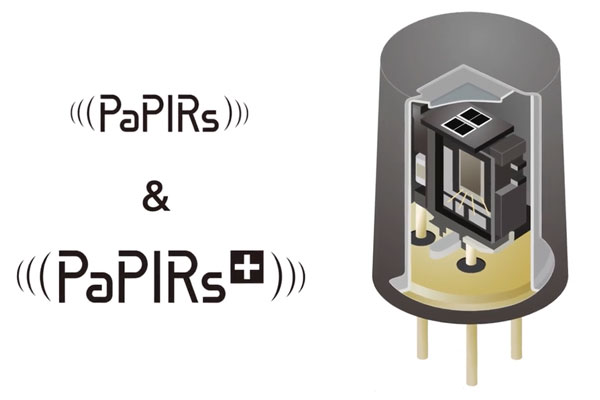
Passive or pyroelectric infrared (PIR) sensors are thermal detectors and suitable as motion sensors. They react to a change in infrared heat radiation in the environment, e.g. by a moving person (or object). The latest Panasonic PIR generation, the EKM family, comprises two mechanically identical series: the EKMB (1µA, 2µA and 6µA; digital output) and the EKMC series (170µA; digital and analog output).
The digital PaPIRs sensors offer fixed, preset switching thresholds, an open-drain output (On/Off), temperature and offset voltage compensation, and demonstrate extremely high electromagnetic interference immunity (please contact us for test reports). The analog PaPIRs & PaPIRs+ sensors with an integrated op-amp circuit can be directly connected to the analog input of a microcontroller. The threshold levels can be adjusted accordingly to achieve the same sensitivity as the various digital versions. Moreover, they exhibit excellent electromagnetic interference immunity (please contact us for test reports).
The EKMB series (1µA, 2µA, 6µA, digital) can be used for battery-powered devices, and the EKMC series (170µA, digital and analog) for wired applications.
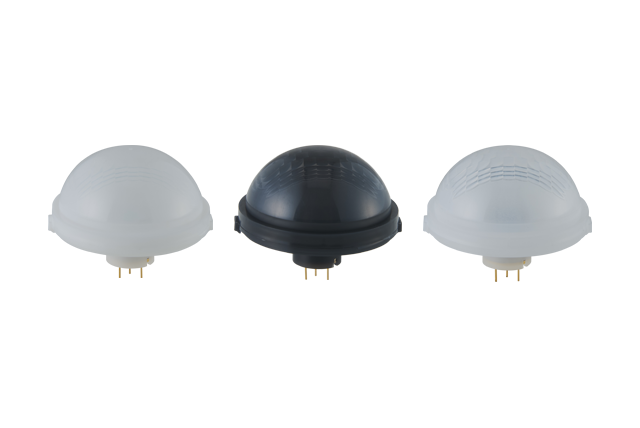
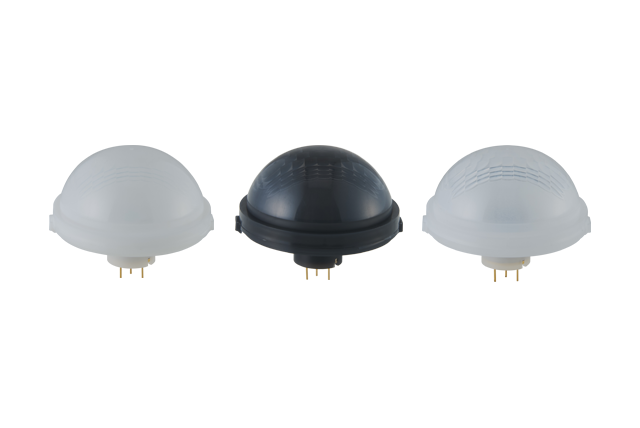
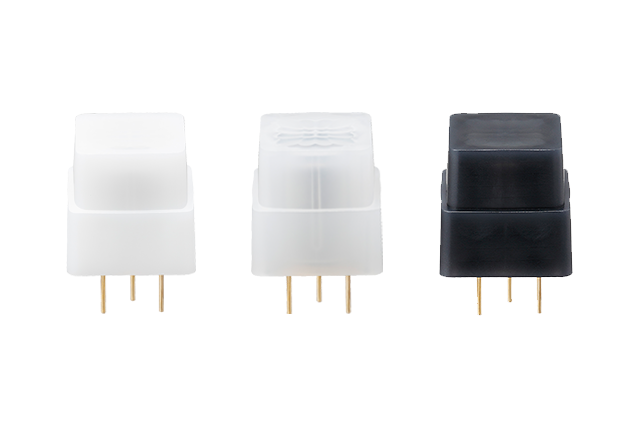
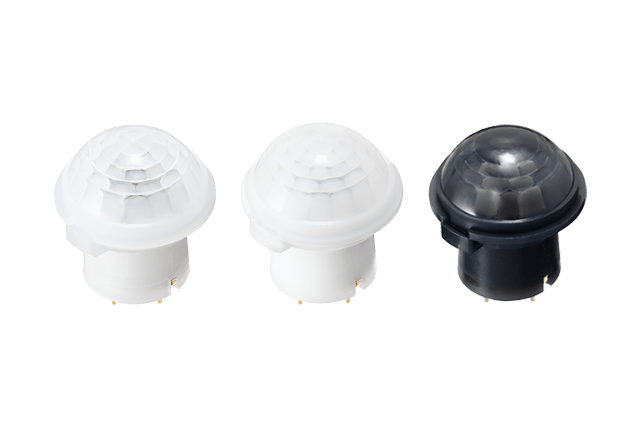
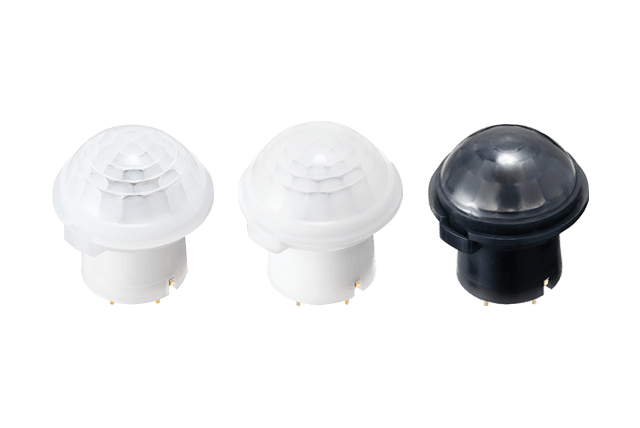
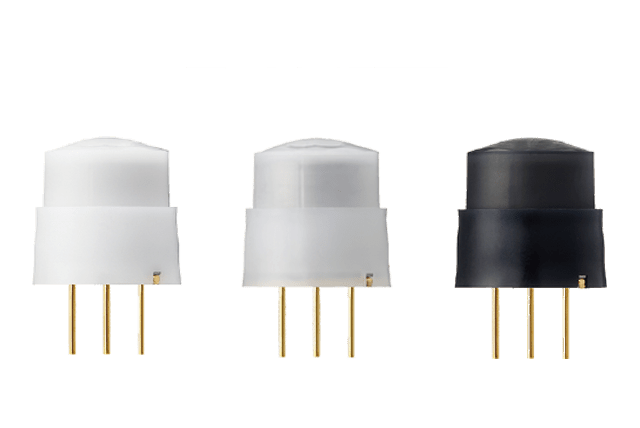
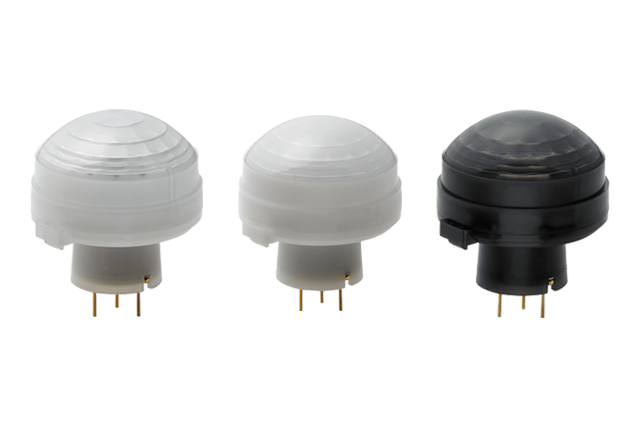
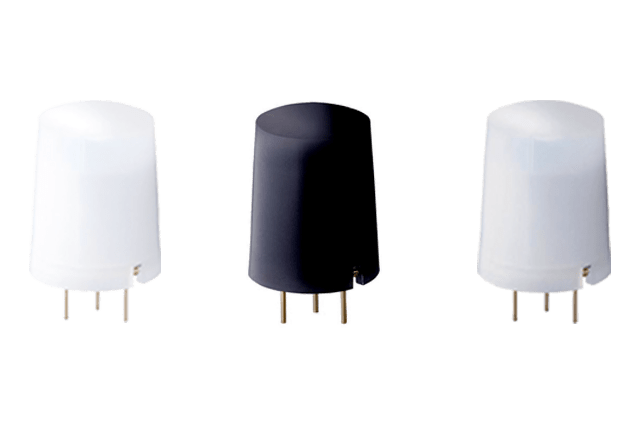
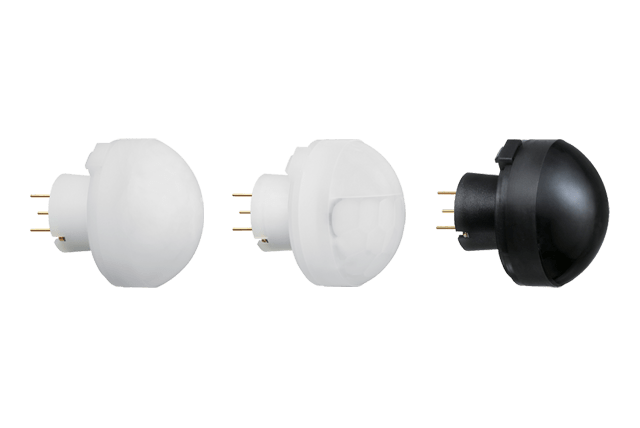
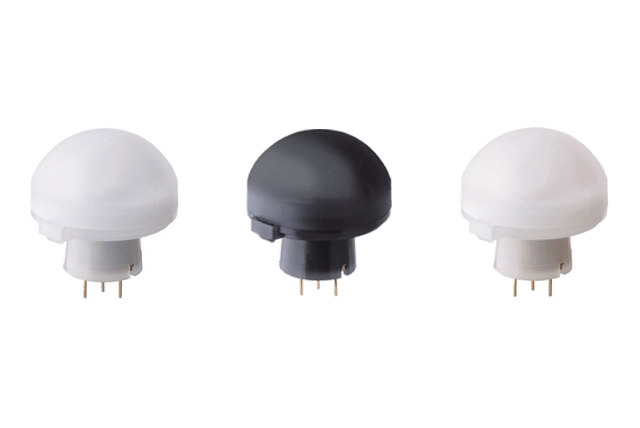
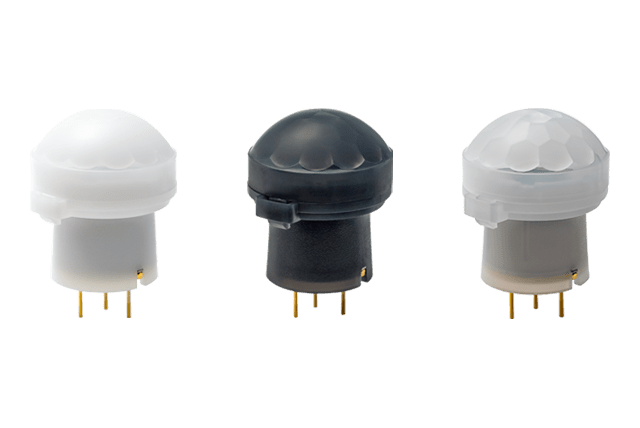
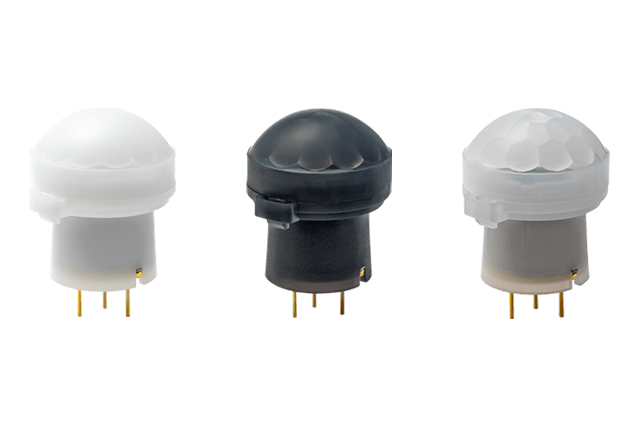
All different types of lenses are available in three colors: white, black, and pearl white.
PaPIRs+ PIR Motion Sensors – Next generation sensitivity
PaPIRs+ is the latest evolution of Panasonic’s ultra-compact PaPIRs PIR motion sensor technology and remains fully drop-in compatible. With up to 2× higher sensitivity, it delivers significantly enhanced detection performance for a wide range of applications - even in demanding installations.
Designed for modern building automation, lighting control, HVAC systems, workspace management and security applications, PaPIRs+ improves reliable detection of small and slow human motion while reducing false “vacant” events.
With enhanced sensitivity and optimized detection performance, PaPIRs+ enables more accurate presence detection, longer detection distances and improved system reliability—supporting energy savings and compliance with modern building efficiency requirements.

Technical Comparison Ultra Slight Motion Detection Type (09-lens) at a Glance
| Product Family | Part Number | Specified Detection Distance | Dimensions |
|---|---|---|---|
| PaPIRs | EKMC160911x (digital on/off, 170µA) EKMC260911xK (analog op-amp, 170µA) EKMB130911xK (digital on/off, 6µA) |
6m | Height: 17,2mm Lens diameter: 16,6mm |
| PaPIRs+ | EKMC160981x (digital on/off, 170µA) EKMC260981xK (analog op-amp, 170µA) EKMB130981xK (digital on/off, 6µA) |
8,5m (√2× longer) |
Same as PaPIRs |
Key Features of PaPIRs+
- Compact all‑in‑one PIR sensor: lens + ASIC with built‑in signal processing
- Up to 2× higher sensitivity compared to PaPIRs
- Typ. 5× higher sensitivity than conventional PIR sensors
- Improved detection of small and slow movements
- Longer detection distances (typically ×√2 vs. PaPIRs, lens‑dependent)
- Coverage options from low-bay and mid-bay to ultra-high-bay (20 m+) installations
- Broad lens portfolio, with PaPIRs lens types largely available as PaPIRs+
- LiTaO₃ pyroelectric elements – no RoHS exemption concerns (PZT-free design)
Applications
- Lighting control systems and smart luminaires
- HVAC and building automation
- Workspace and occupancy monitoring
- Safety and security systems
Flat Wide Detection Type PIR – featuring PaPIRs+
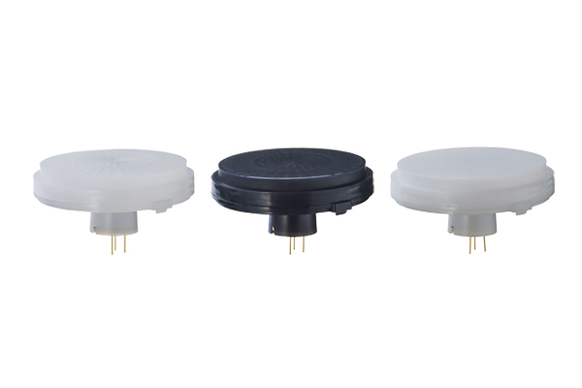
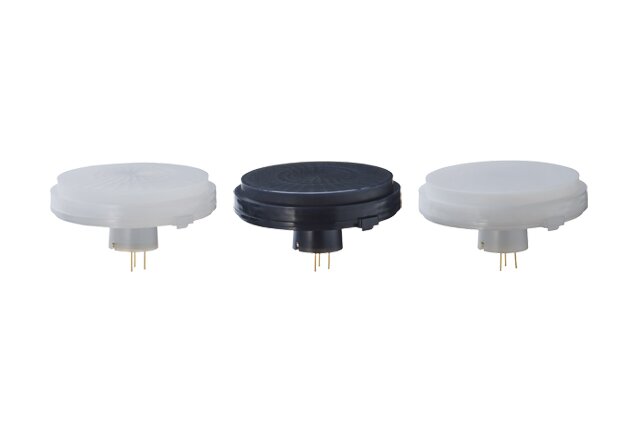
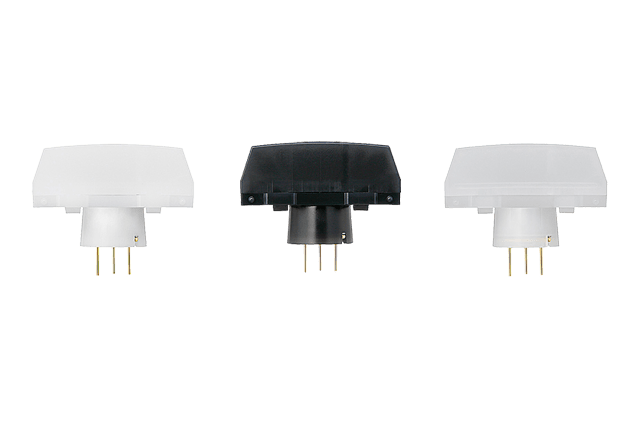
Panasonic Industry’s Flat Wide Detection Type PIR sensor is the first to feature new PaPIRs+ technology, ensuring gap-free motion detection in a sleek, flat design. Ideal for design-sensitive applications, it offers an ultra-wide field of view (136.4° × 135.4°), reduces sensor count, and comes in white, pearl white, and black lense.

Downloads
| Name | Size | Date | Language |
|---|---|---|---|
| LUMINAID User Story | 992 KB | 28.03.2023 | English |
| Name | Size | Date | Language |
|---|---|---|---|
| Application Insight - PaPIRs | 5 MB | 31.05.2022 | English |
| Name | Size | Date | Language |
|---|---|---|---|
| PaPIRs PaPIRs+ Catalogue. PIR Motion Sensors 2025 | 5 MB | 19.09.2025 | English |
| Shortform Catalogue. Industry Europe. | 9 MB | 26.03.2024 | English |
| Name | Size | Date | Language |
|---|---|---|---|
| Flyer PaPIRs Motion Sensors | 1 MB | 12.02.2024 | English |
| PaPIRs DetectionAreaAdjustment_whitepaper | 3 MB | 26.03.2026 | English |
| Name | Size | Date | Language |
|---|---|---|---|
| PIR Motion sensors, Detection area image | 841 KB | 06.10.2023 | English |
Working Principle





Get an overview of the most important applications
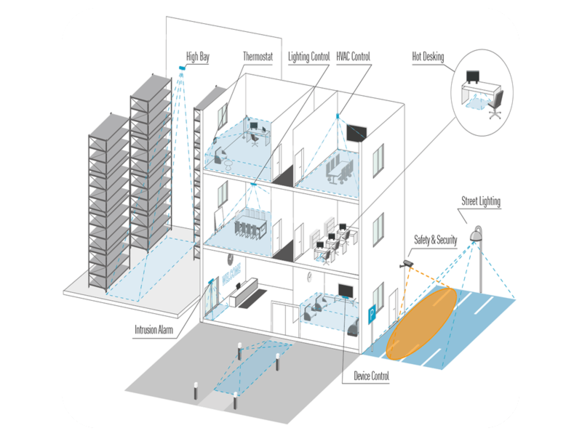
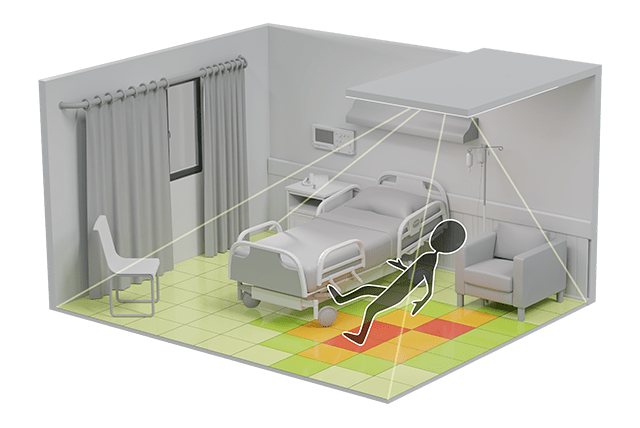
Nowadays, pyroelectric motion detectors are not only used in the building automation respectively smart home area but also in the industrial and consumer sector. The applications go far beyond the classic areas such as light, air, climate and security applications. The highly sensitive PaPIRs are used, for example, in desk sharing applications. In addition, products with artificial intelligence use motion sensors to act at the right moment and pro-actively with potential users. Based on your target specification, we jointly select the optimal sensor, help you to generate the desired detection range, and give you product design and installation tips. Our team will support you with the design-in. Contact us!
Which is the best PaPIRs sensor for your application?
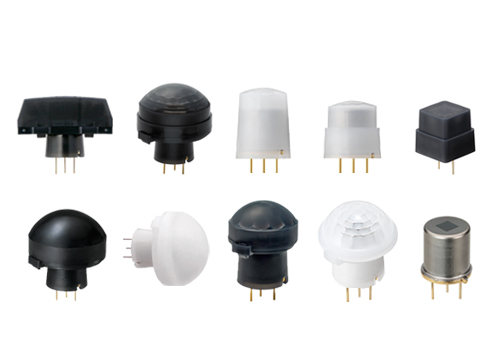
Panasonic's Passive Infrared Sensors (PaPIRs) are available in different versions. The individual motion sensors differ, for example,in power consumption, output interfaces, and lenses. In addition, most of the digital sensors can be ordered with different threshold values, which influences not only the sensitivity but also the false alarm probability (e.g. those caused by air or temperature fluctuations). The requirements for motion detectors are often not clearly definable and are completely different depending on the type of installation and installation location.
An important factor is, for example, the difference in temperature between the object to be detected and the background. The size and the speed of the target object, the size and pattern of the PIR's detection zones, the direction of movement relative to the sensor can also strongly influence the sensor performance. What still often works in simple reference environments can cause problems in the field.
With our know-how we would like to support and accompany you during the development phase. Not sure which is the right sensor or the optimal optics for your application? Want to limit the detection range of a certain sensor and don't know how? Contact us and we can find a solution together.