
From analog to digital sensing in semiconductor equipment
Why semiconductor machine builders are rethinking sensor connectivity
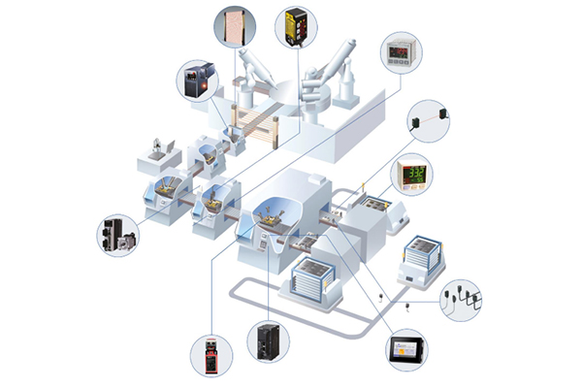
Semiconductor equipment is becoming more complex. Machine builders are dealing with tighter tolerances, higher throughput, frequent product changeovers and strict uptime requirements.
At the same time, sensors are no longer isolated components. They are part of a larger control architecture that must provide reliable data, diagnostics and repeatability across the entire machine lifecycle.
This is why many semiconductor OEMs and equipment builders are moving away from purely analog sensors toward digital sensor communication, using technologies such as IO‑Link and real‑time Industrial Ethernet networks like EtherCAT.
The limitations of analog sensors in semiconductor equipment
Analog sensors (for example 0–10 V or 4–20 mA) are still widely used in semiconductor machines. However, in modern equipment they introduce several challenges:
- Analog signals are sensitive to noise, grounding issues and signal drift
- Scaling and calibration must be handled manually in the PLC
- Diagnostics are limited to a single measured value
- Sensor replacement often requires manual re‑parameterization
- Troubleshooting is time‑consuming and operator‑dependent
In semiconductor environments, where downtime is extremely costly and reproducibility is critical, these limitations become increasingly visible.
What digital sensors add: IO Link in practical terms
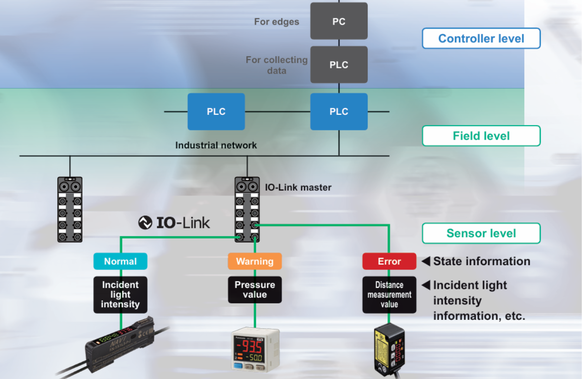
IO‑Link is a globally standardized digital communication interface for sensors and actuators (IEC 61131‑9).
Unlike analog signals, IO‑Link enables bidirectional communication between the sensor and the control system. This means that sensors provide more than a measurement value.
IO‑Link sensors can deliver:
- Process data
- Device identification
- Parameter sets
- Status and diagnostic information
For semiconductor machine builders, this shifts the role of the sensor from a passive device to an active data source within the machine.

Where EtherCAT fits into the architecture
EtherCAT is a real‑time Industrial Ethernet network designed for deterministic communication, precise synchronization and short cycle times.
In semiconductor machines, especially those with:
- high‑speed motion
- synchronized axes
- time‑critical processes
EtherCAT is commonly used as the real‑time control backbone.
In modern architectures:
- EtherCAT handles deterministic control and synchronization
- IO‑Link functions as the intelligent sensor layer close to the process
Together, they form a structured and scalable control concept.
Panasonic Industry solutions for digital sensing in semicon
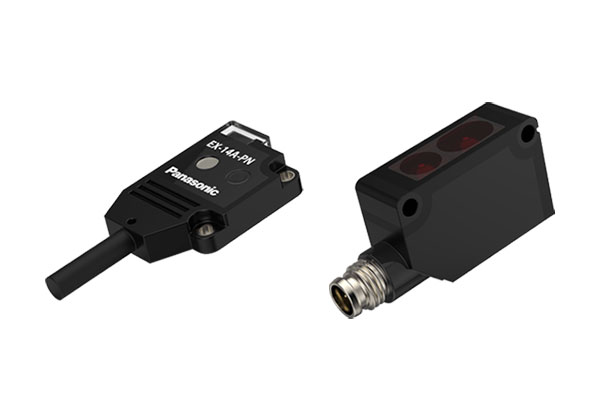
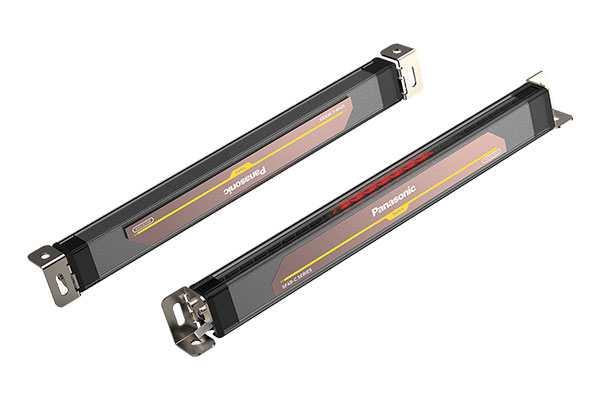
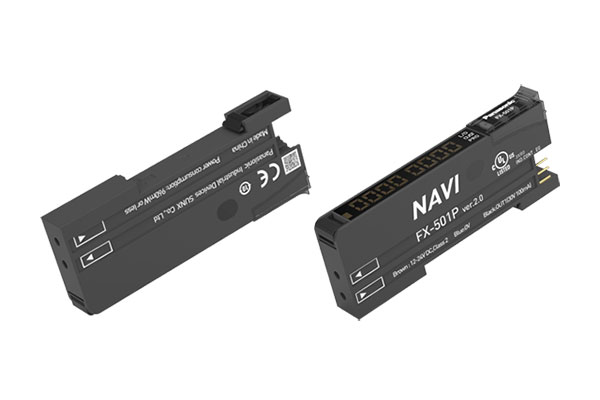
Panasonic Industry offers a broad portfolio of IO‑Link‑enabled sensors and factory automation solutions that support this transition from analog to digital sensing.
Examples include:
- IO‑Link photoelectric sensors
- IO‑Link measurement sensors
- IO‑Link pressure sensors
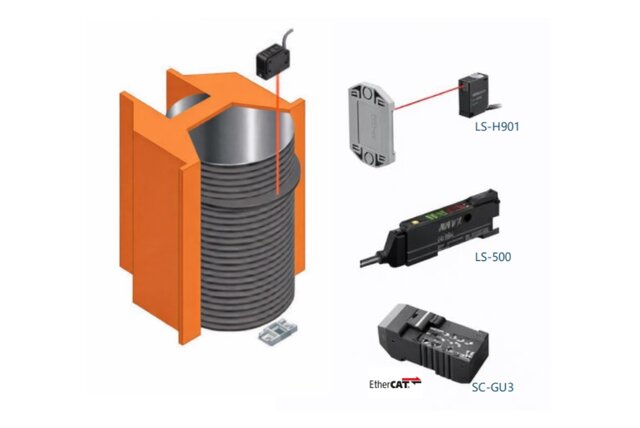
These sensors can be integrated into higher‑level control networks via IO‑Link masters and Industrial Ethernet systems such as EtherCAT.

When it makes sense to move from analog to digital sensing
For semiconductor machine builders, a transition toward IO‑Link and EtherCAT is especially relevant when:
- Machine uptime and serviceability are critical
- Sensors must be replaced or reconfigured frequently
- Detailed diagnostics improve maintenance efficiency
- Architecture standardization is a design goal
- Digital twins, data logging or advanced analytics are planned
In semiconductor equipment, reliability is built from thousands of small decisions. Sensor connectivity is one of them.
Moving from analog sensors to digital sensing with IO‑Link and EtherCAT is not just an automation upgrade. It is a strategy to improve diagnostics, repeatability, serviceability and long‑term machine performance.
Panasonic Industry supports semiconductor machine builders with IO‑Link‑ready sensors and a broad factory automation portfolio designed for modern, data‑driven equipment architectures.
FAQ – Digital sensing in semiconductor equipment (IO‑Link & EtherCAT)
|
Why are semiconductor equipment builders moving from analog to digital sensors?
|
Semiconductor equipment builders are moving away from analog sensors because modern machines require more than just a measurement signal. As systems become more complex and uptime requirements increase, engineers need access to diagnostics, status information and repeatable configurations. Digital sensors provide this additional context, which makes it easier to maintain stable and predictable machine performance.
|
|
What are the limitations of analog sensors in semiconductor equipment?
|
Analog sensors are limited because they only provide a single output signal, which makes it difficult to diagnose the root cause of an issue. They are also more sensitive to noise, signal drift and grounding problems, which can affect measurement accuracy over time. In addition, sensor replacement often requires manual recalibration, which increases downtime and introduces variability in the process.
|
|
How does IO‑Link improve sensing in semiconductor machines?
|
IO‑Link improves sensing by enabling two-way communication between the sensor and the control system. This allows sensors to provide not only measurement data, but also diagnostic information, device status and parameter settings. As a result, engineers can better understand what is happening in the process and respond more quickly to deviations.
|
|
Why is EtherCAT used together with IO‑Link in semiconductor equipment?
|
EtherCAT is used together with IO‑Link because it provides deterministic, real-time communication for machine control, while IO‑Link operates as the intelligent sensor layer closer to the process. Together, they create a structured architecture in which fast control and detailed sensor data are integrated, supporting both high-speed operation and reliable diagnostics.
|
|
How does digital sensing reduce downtime in semiconductor equipment?
|
Digital sensing reduces downtime by enabling faster and more accurate troubleshooting. Instead of only indicating that something is wrong, digital sensors provide information about the condition of the device and the process. This makes it easier to identify the root cause of a problem and resolve it quickly, which minimizes interruptions in production.
|
|
Why is repeatability important when replacing sensors?
|
Repeatability is important because semiconductor processes require consistent performance over time. When a sensor is replaced, the system must behave exactly the same as before to avoid requalification or process variation. Digital sensing enables this by storing parameters centrally and automatically applying them to new devices, ensuring consistent operation.
|
|
How does digital sensing support scalable semiconductor equipment design?
|
Digital sensing supports scalability by enabling standardized communication, simplified integration and consistent data handling across the machine. This helps engineers design systems that are easier to reproduce, maintain and expand. As a result, equipment can be scaled from prototype to high-volume manufacturing with fewer changes.
|