

Fiber optic connections in vacuum
Maintaining a fully sealed vacuum chamber is critical in semiconductor manufacturing. Even the smallest leak can disrupt chamber stability and negatively affect key process steps. To support these demanding conditions, Panasonic Industry has engineered a vacuum‑resistant fiber‑optic flange system designed for extreme environments and high‑temperature semiconductor applications. This solution combines process stability, clean integration, and fast installation.
A vacuum flange designed for semiconductor precision
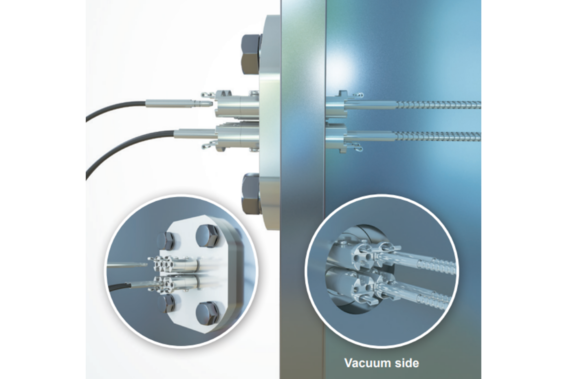
The Panasonic vacuum flange creates a reliable seal between the atmospheric side and the vacuum chamber. This prevents:
- Pressure fluctuations during sensitive vacuum steps
- Unwanted contamination entering the chamber
- Particle generation caused by over‑tightened mechanical fittings
This solution pairs with Panasonic’s vacuum‑resistant optical fibers, designed for operation under high temperatures up to 300°C, enabling reliable sensing in challenging SEMI process environments.
Fast, tool free fiber installation
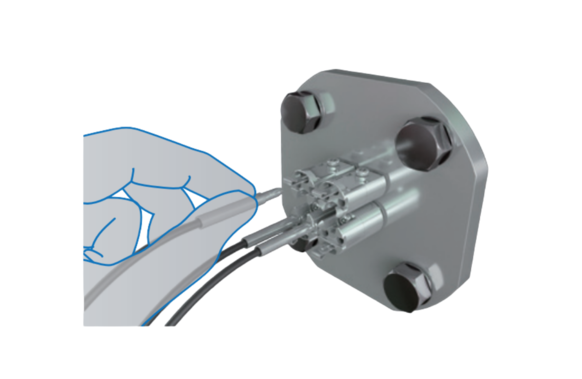
One standout feature is the one‑touch, one‑second installation mechanism, originally used in Panasonic’s vacuum‑resistant fiber systems. It allows engineers and operators, even when wearing gloves, to mount and secure fibers with ease. Simply place the flange, insert the fiber head, and the system locks into position.
Compatible fiber types include:
- Thru‑beam fibers (e.g., FT‑40V)
- Long‑range reflective fibers (e.g., FD‑KZ50V)
- High‑accuracy reflective sensing options
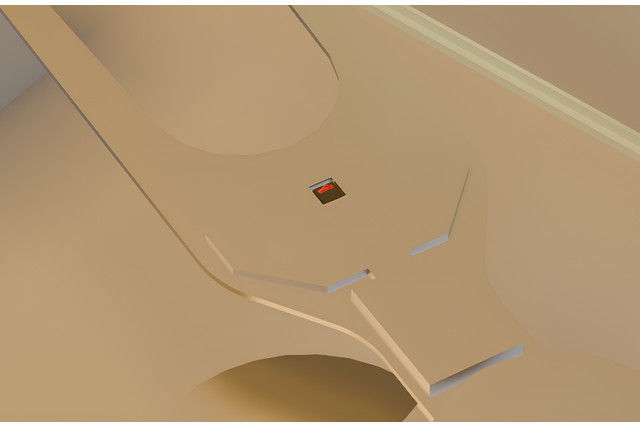
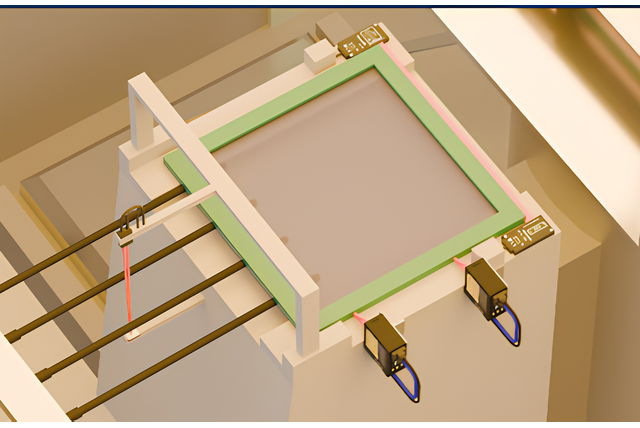
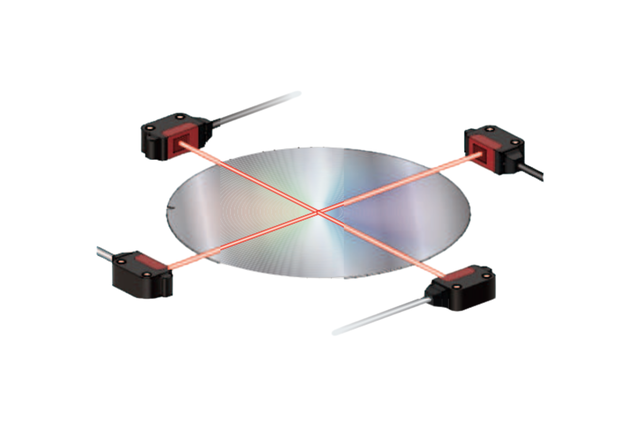
These fibers support wafer centering, wafer presence, and detection, even for transparent wafer materials, and maintain consistent performance in vacuum chambers and high‑temperature environments.
Key advantages for equipment builders and process engineers
- Ultra‑fast installation: connect a fiber in one second, no tools needed
- Efficient system design: one feedthrough supports multiple fibers
- High‑temperature operation: reliable up to 300°C
- Compact and clean: ideal for modern vacuum platforms
- Stable detection performance: advanced fiber sensor technology ensures both short‑ and long‑term stability under vacuum conditions
How to:

FAQ – Fiber optic sensing in vacuum environments
|
Why are fiber optic sensors used in vacuum environments?
|
Fiber optic sensors are used in vacuum environments because they allow detection without placing electronic components directly inside the chamber. By separating the sensing head from the amplifier, it becomes possible to perform reliable measurements under vacuum conditions where heat, outgassing or electrical interference must be avoided.
|
|
What challenges do conventional sensors face in vacuum applications?
|
Conventional sensors often struggle in vacuum environments because they rely on integrated electronics at the sensing point. These electronics can generate heat, outgas, or be affected by pressure conditions. In addition, limited installation space and strict cleanliness requirements make it difficult to use standard sensing solutions without affecting process stability.
|
|
How do fiber optic sensors enable stable detection in vacuum?
|
Fiber optic sensors enable stable detection by separating the optical sensing point from the electronic components. The sensing head itself contains no active electronics, which means it does not generate heat or interfere with the process environment. Light is transmitted through the fiber, allowing precise detection even under extreme conditions such as vacuum or chemically sensitive environments.
|
|
Why is non-intrusive sensing critical in semiconductor processes?
|
Non-intrusive sensing is critical because even small disturbances in semiconductor environments can affect process stability and yield. Heat generation, light emission or contamination near the process area can introduce variation that is difficult to detect immediately. By using sensing technologies that do not influence the environment, these risks can be minimized.
|
|
How does fiber optic sensing support long-term system stability?
|
Fiber optic sensing supports long-term stability by providing consistent and repeatable detection without being affected by environmental constraints such as vacuum or contamination. This reduces the need for frequent recalibration or redesign and helps maintain stable system performance over the lifecycle of semiconductor equipment.
|