
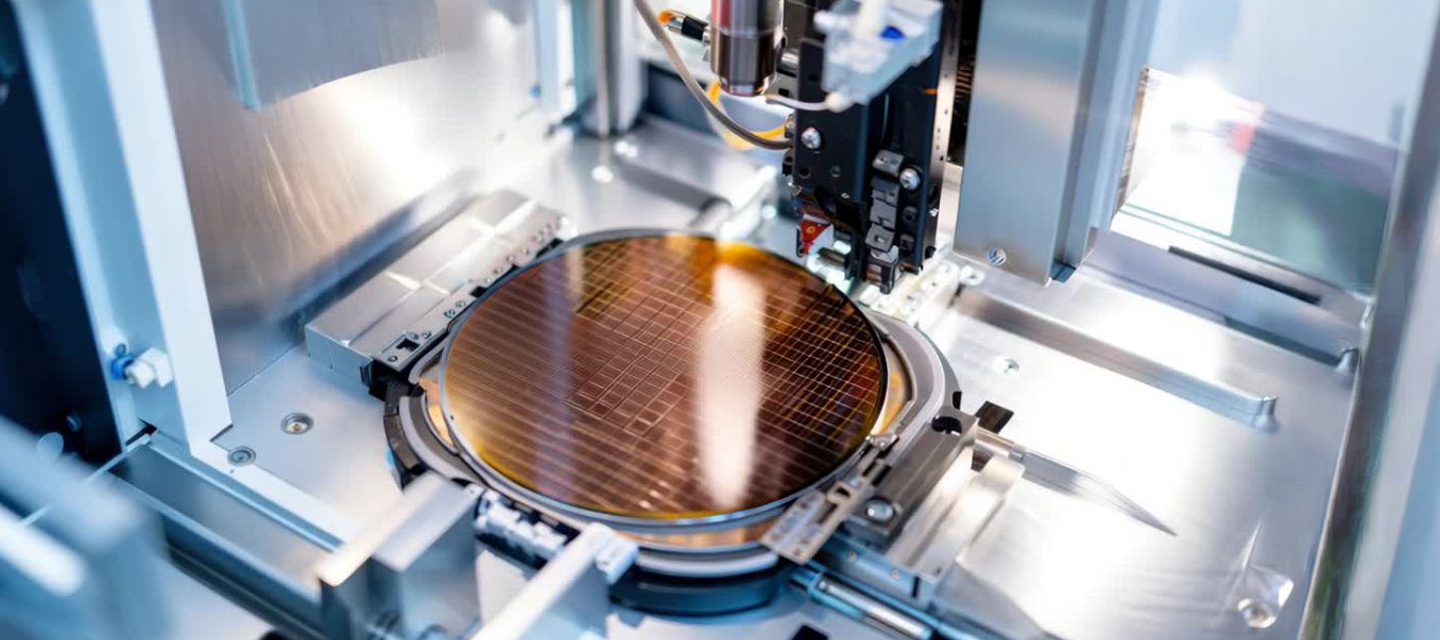
Semiconductor front-end resist coating process
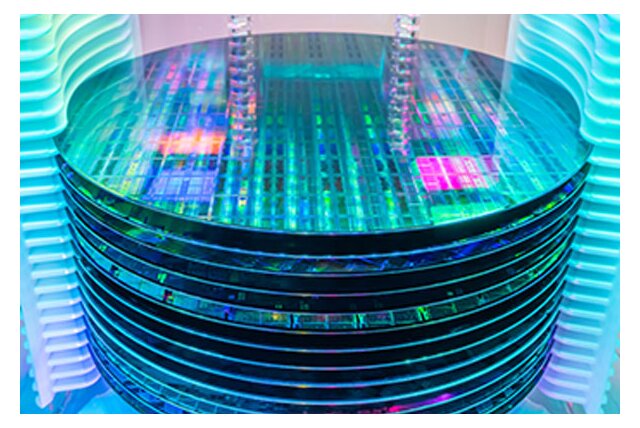
In semiconductor front-end manufacturing, the resist coating process applies a uniform photosensitive layer onto the wafer. This layer forms the foundation for lithography and directly determines how accurately patterns can be transferred during exposure.
At nanometer scale, even small variations in coating thickness or wafer condition can lead to:
- pattern distortion
- critical dimension variation
- downstream yield loss
Resist coating is therefore not just about applying material. It is about ensuring stable, repeatable conditions across the entire coating process.
What challenges define the resist coating process?
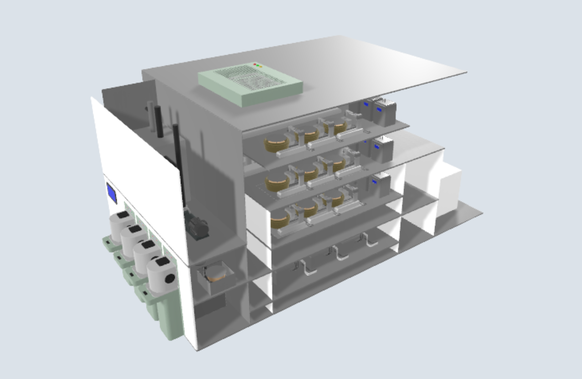
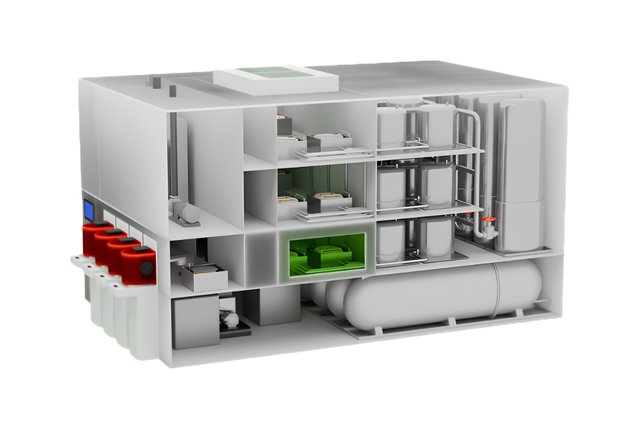
Resist coating typically takes place in enclosed spin coating systems, where multiple process parameters must remain tightly controlled. Wafer rotation, liquid dispensing, airflow and temperature all influence how the resist spreads across the wafer surface.
At the same time, wafers must be handled and positioned accurately, while electrostatic charge and contamination need to be controlled to avoid disturbing the coating layer. Detection and monitoring must function reliably without introducing interference.
Even small instabilities in these conditions can introduce variation that only becomes visible later, during lithography or etching.
The sections below explain how these challenges are addressed.
Liquid dispensing and coating control
Ensuring uniform resist distribution
During coating, photoresist is dispensed onto a rotating wafer to create a uniform thin layer. Any variation in liquid flow, nozzle position or dispensing stability can directly affect layer thickness.
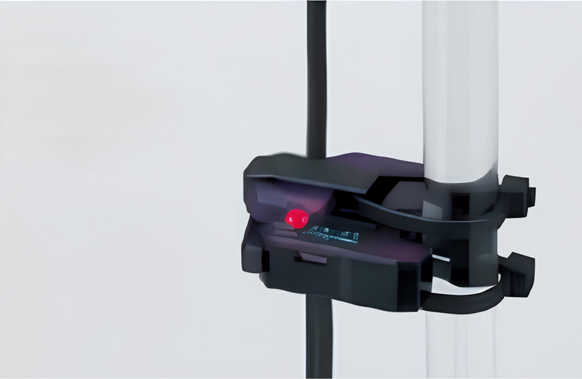
Panasonic Industry supports this process with liquid detection and monitoring solutions such as EX‑F1 and FD series sensors, which enable stable level control and prevent irregularities in supply.
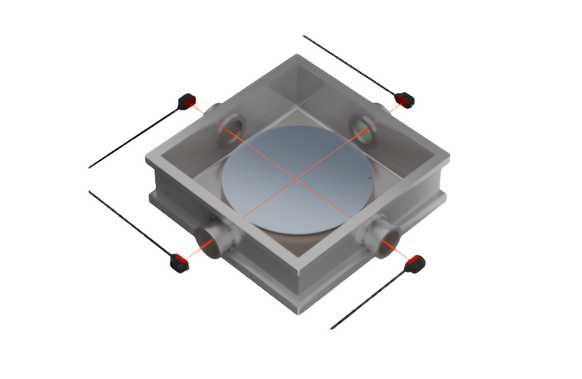
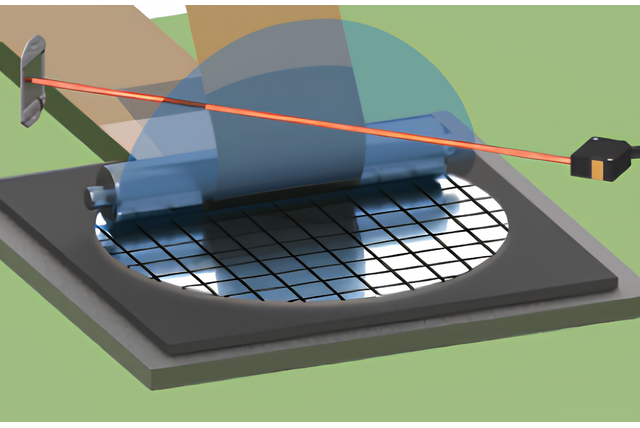
In addition, precise positioning of dispensing systems can be verified using laser displacement sensors such as the EX‑L200 and HG‑C series, ensuring that resist is applied under controlled and repeatable conditions.
This allows consistent coating thickness across the wafer, supporting accurate downstream patterning.
Wafer positioning and inclination control
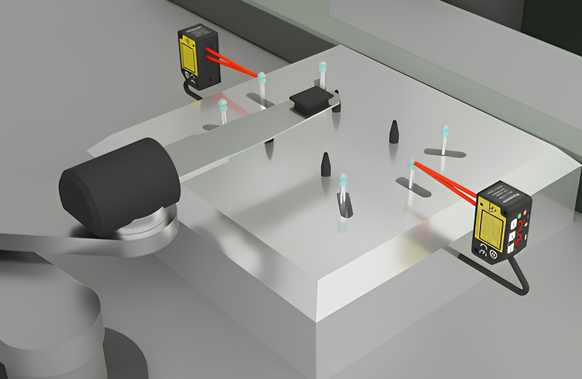
Preventing coating variation at wafer level
The uniformity of the resist layer strongly depends on correct wafer positioning during spin coating. Even slight inclination or misalignment can result in uneven distribution of the resist.
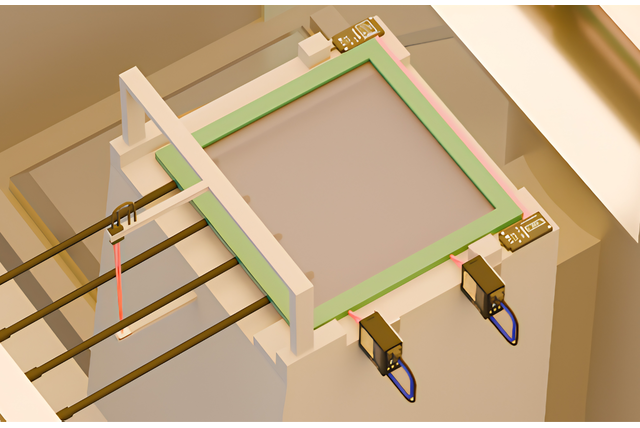
To ensure stability, Panasonic Industry provides laser displacement sensors (HG‑C / HL‑G series) that detect wafer position and inclination with high precision. These sensors make it possible to verify wafer alignment before and during coating.
By maintaining correct wafer positioning, coating uniformity is improved and variation in subsequent lithography steps is reduced.
Detection in enclosed coating systems
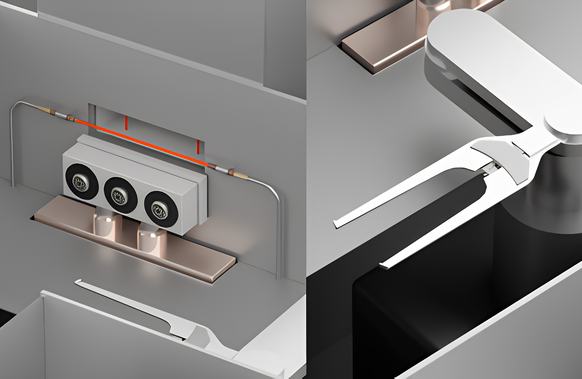
Monitoring process conditions without disturbance
Spin coating systems are enclosed environments where airflow, pressure and temperature must remain stable. Detection systems need to operate reliably without disturbing these sensitive conditions.
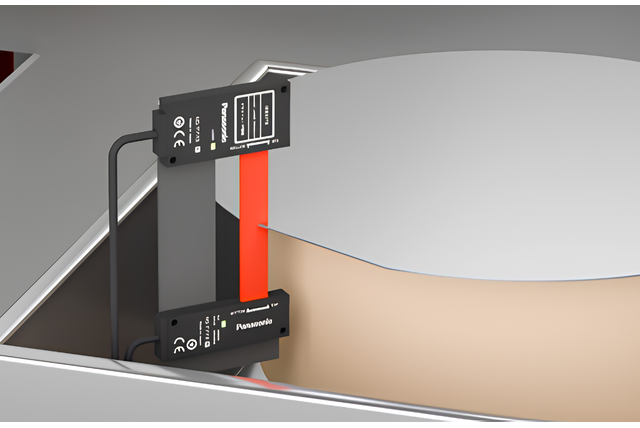
Panasonic Industry supports this with compact laser sensors (EX‑L200) and fiber optic sensing solutions (FT series with remote amplifiers), allowing non-intrusive detection of wafer presence, positioning and system status.
These technologies enable accurate monitoring while maintaining stable process conditions inside the coating module.
Electrostatic and contamination control
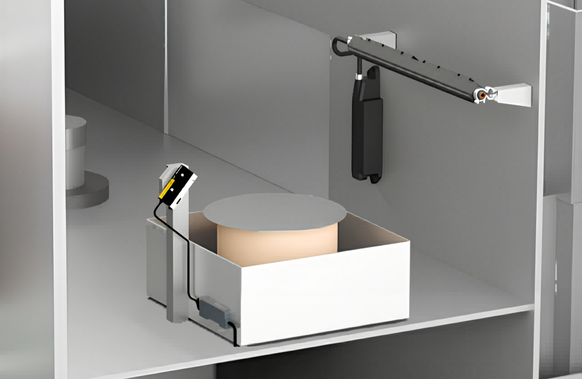
Maintaining clean wafer conditions
Electrostatic charge can build up during wafer handling and transfer, especially at the loader and unloader stages. This can attract particles to the wafer surface, affecting coating quality and introducing defects.
Panasonic Industry addresses this with ionizers such as the ER‑X and ER‑V series, which neutralize charge and reduce particle attraction.
Combined with non‑intrusive sensing, this ensures that wafers remain clean and stable before and after coating, supporting high-quality resist layers.
Safety and process monitoring
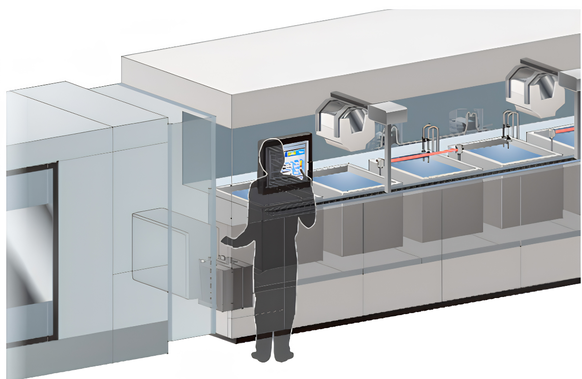
Ensuring reliable and controlled operation
Resist coating systems must operate under controlled conditions to ensure safety and process stability. Monitoring of parameters such as pressure, airflow, leakage and mechanical positioning is essential.
Panasonic Industry supports this with:
- SQ4 leakage sensors, providing early detection of liquid leakage
- positioning and protrusion sensing using laser and fiber technologies
- monitoring solutions to track process conditions throughout the coating system
These solutions help prevent downtime, reduce contamination risk and ensure stable operation across the entire coating process.
Why coating stability defines downstream performance
The resist coating step directly determines the quality of the lithography process. Any variation in coating thickness or uniformity will affect how patterns are exposed and transferred.
Instabilities introduced at this stage can lead to:
- pattern deviations
- line edge variation
- reduced etch accuracy
- lower yield
Because these effects are difficult to correct later, coating becomes a critical step in ensuring overall process stability.
Panasonic Industry solutions for resist coating processes
Panasonic Industry supports semiconductor equipment builders with sensing and control technologies designed for coating environments.
These include:
- laser and displacement sensors for positioning and inclination detection
- liquid level and flow sensing for stable dispensing
- fiber optic sensors for non-intrusive detection
- ionizers for electrostatic control
- leakage and safety monitoring solutions
Together, these technologies enable coating systems that are stable, repeatable and ready for high-volume manufacturing.

FAQ – Resist Coating
|
Why is resist coating critical in semiconductor manufacturing? |
Resist coating is critical because it defines the base layer for lithography. The uniformity and stability of the resist layer directly influence how accurately patterns can be transferred onto the wafer. |
|
What causes variation during resist coating? |
Variation during coating is typically caused by instabilities in liquid dispensing, wafer positioning, airflow or electrostatic effects. These factors influence how the resist spreads across the wafer surface. |
|
How does wafer positioning affect coating uniformity? |
Wafer positioning plays a key role because even slight inclination during spin coating can lead to uneven distribution of resist. This results in variations in layer thickness across the wafer. |
|
Why is electrostatic control important in coating processes? |
Electrostatic charge can attract particles to the wafer surface, which affects coating quality and introduces defects. Controlling charge helps maintain clean and stable process conditions. |
|
How do sensors improve coating process stability? |
Sensors enable continuous monitoring of process parameters such as liquid flow, wafer position and system conditions. By detecting deviations early, they help maintain stable and repeatable coating performance. |