
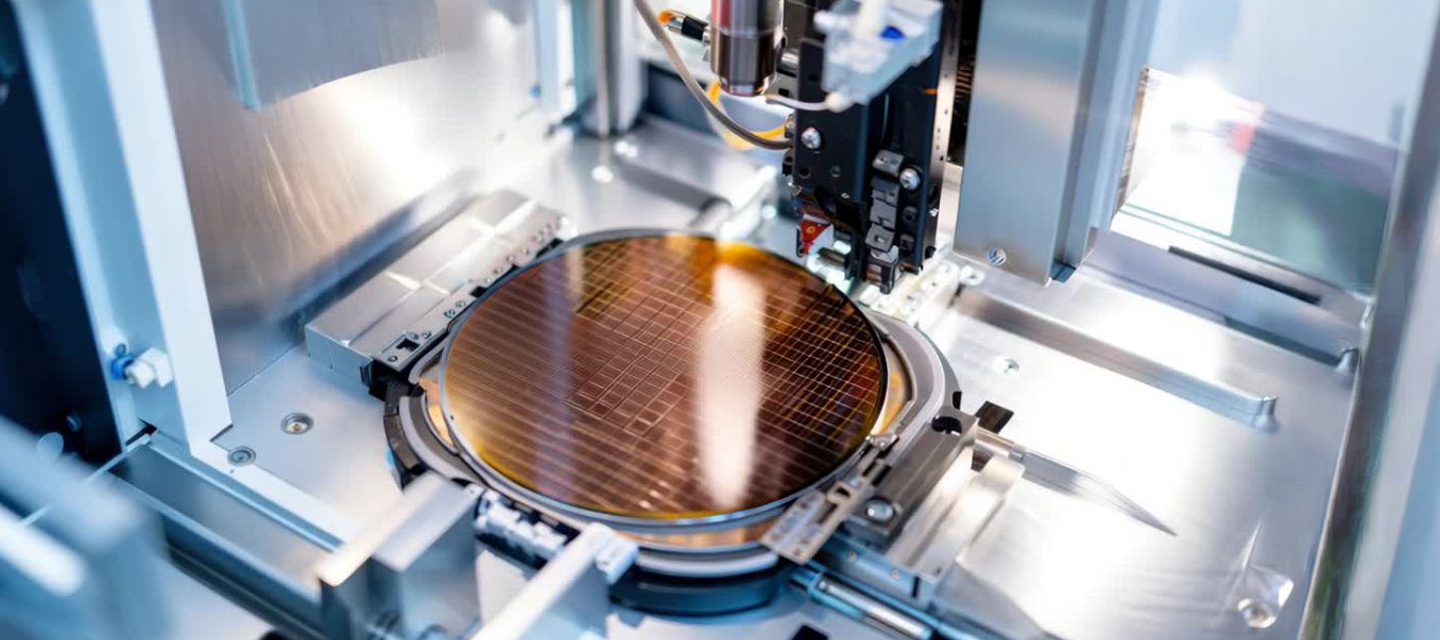
Semiconductor back-end grinding process
In semiconductor back-end manufacturing, wafer grinding is used to reduce wafer thickness with high precision. This step is essential for enabling advanced packaging, improving thermal performance and supporting device miniaturisation.
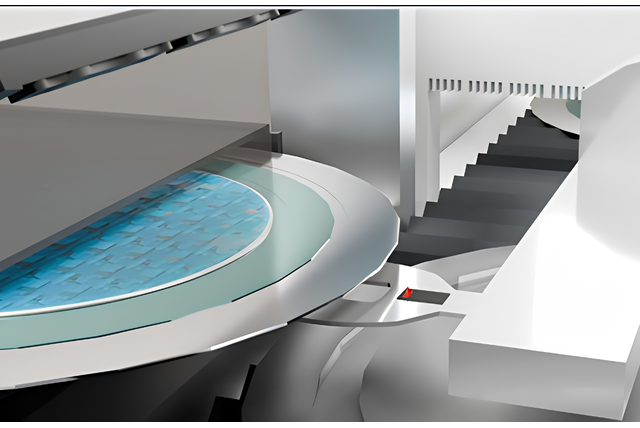
Grinding is a mechanical process where material is removed from the wafer backside using a rotating grinding wheel. At extreme thinness levels, even minor instability can lead to:
- wafer breakage
- thickness variation
- mechanical stress
Grinding is therefore not only about material removal, but about maintaining stable mechanical, thermal and process conditions throughout the entire system.
What challenges define the grinding process?
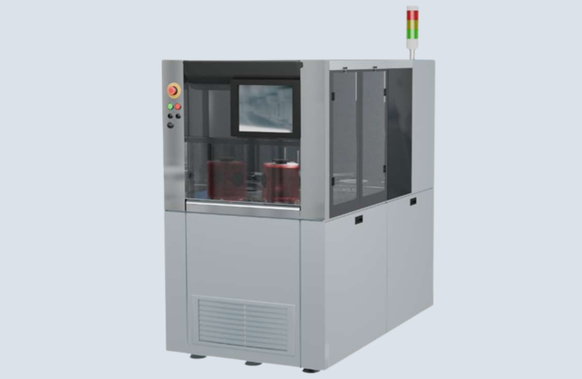
Wafer grinding operates under demanding mechanical conditions, where rotation force, pressure, cooling and positioning all interact. The wafer must remain stable while material is removed with micrometer precision.
At the same time, wafers become increasingly fragile as thickness decreases. This makes wafer handling, suction stability and precise positioning critical.
In addition, the grinding process introduces challenges such as:
- ensuring stable wafer adsorption (vacuum chuck)
- detecting wafer protrusion or misplacement
- managing cooling flow and leakage
- controlling contamination and electrostatic effects
- monitoring wear of grinding components
All of these factors determine whether grinding remains stable and repeatable.
Wafer adsorption and positioning
Ensuring stable wafer fixation during grinding
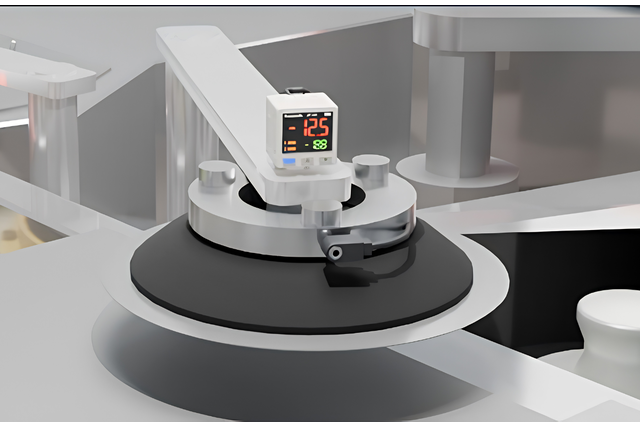
During grinding, wafers must be firmly held in place using vacuum chucks. Any instability in adsorption can lead to wafer movement, resulting in thickness variation or even wafer damage.
Panasonic Industry supports this with digital pressure sensors such as the DPH‑100 / DPS‑400 series, which enable real-time monitoring of vacuum pressure with high response speed.
These sensors allow reliable detection of wafer suction conditions, ensuring that wafers are correctly fixed before and during grinding. This helps prevent transport errors and supports stable machining conditions.
Wafer handling and seating detection
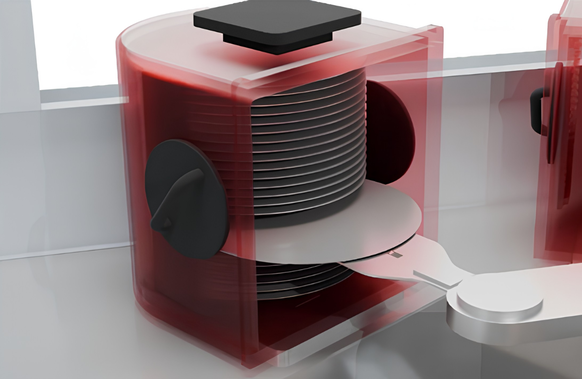
Preventing transfer-induced variation
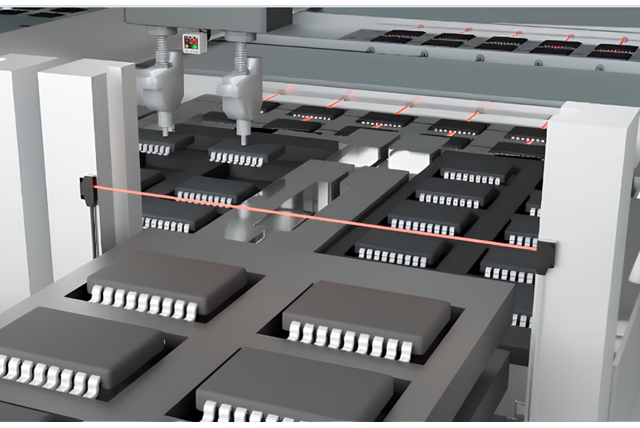
Before grinding starts, wafers are transferred and positioned on the chuck. Incorrect seating or misalignment at this stage can already introduce variation.
Panasonic Industry provides ultra-thin fiber optic sensors such as the FD‑L13H1, which are designed for integration in compact robot hands. These sensors enable highly accurate wafer seating detection while avoiding interference from surrounding structures.
By ensuring correct wafer placement before processing, these solutions help maintain consistent starting conditions and improve yield.
Position and motion detection
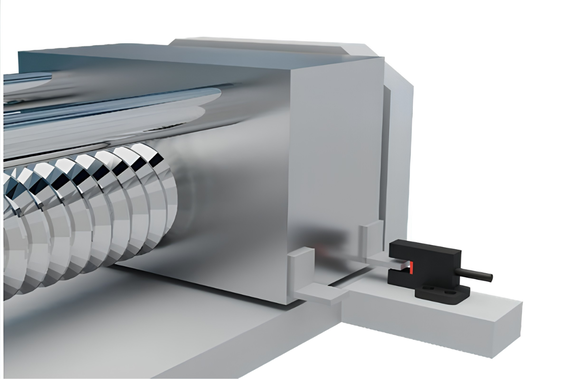
Ensuring stable operation of moving components
Grinding equipment includes multiple moving parts that must operate in precise coordination. Detecting the position of these moving elements is essential for stable operation.
Panasonic Industry supports this with photoelectric sensors (PM series, EX‑10 series), which provide reliable detection of moving parts and positioning states within the system.
This enables accurate control of machine movement, reducing mechanical instability and improving process repeatability.
Electrostatic control and contamination prevention
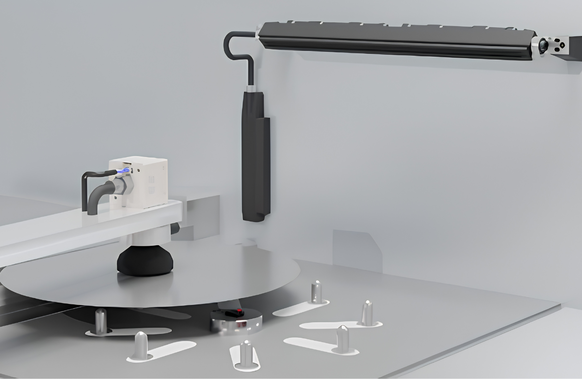
Maintaining clean and stable wafer conditions
During grinding and wafer transfer, electrostatic charge can build up, attracting particles and increasing contamination risk.
Panasonic Industry addresses this with ionizers such as the ER‑X and ER‑V series, which enable fast and controlled neutralisation of electrostatic charge across the wafer surface.
By reducing electrostatic effects, contamination is minimized and wafer quality is preserved.
Cooling and leak monitoring
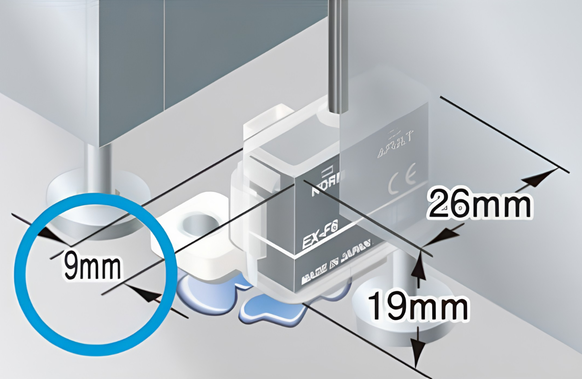
Protecting process stability and uptime
Grinding requires continuous cooling to manage heat and maintain process stability. Any disruption in cooling flow or leakage can directly affect both wafer quality and equipment reliability.
Panasonic Industry provides:
- leakage sensors such as the SQ4 series for early leak detection
- fiber-based leakage solutions (FD‑F / EX‑F series) for compact installation
These solutions enable early detection of both minor and critical leakage conditions, reducing downtime and protecting equipment.
Grinding pad wear monitoring
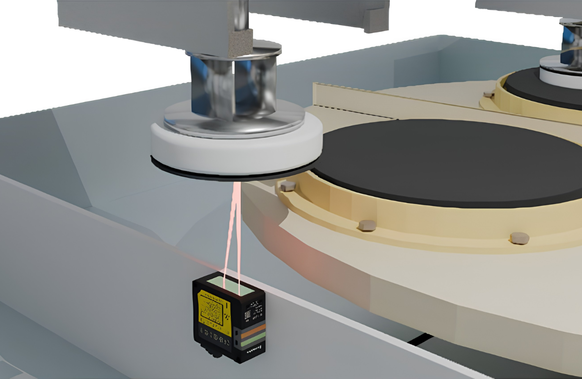
Maintaining consistent material removal
Over time, grinding pads wear down, which can influence removal rates and surface uniformity.
Panasonic Industry supports this with laser displacement sensors such as the HL‑G2 series, which enable accurate measurement of pad wear even on rough surfaces. These sensors provide stable measurement regardless of surface irregularities, ensuring consistent monitoring.
By tracking wear conditions, equipment builders can maintain consistent grinding performance and avoid process drift.
Why stability in grinding defines downstream performance
Grinding determines wafer thickness, which directly impacts mechanical strength and packaging performance.
Instability in this stage can lead to:
- wafer cracking or breakage
- uneven thickness
- packaging and assembly issues
Because wafers are already thinned at this stage, errors are difficult to correct later. This makes grinding a critical process step in ensuring reliable back-end manufacturing.
Panasonic Industry solutions for grinding processes
Panasonic Industry supports semiconductor equipment builders with sensing solutions designed for mechanical, thermal and high‑precision environments.
These include:
- pressure sensors for wafer adsorption control
- fiber sensors for wafer seating detection
- photoelectric sensors for position verification
- ionizers for electrostatic control
- leakage sensors for cooling system monitoring
- laser sensors for wear detection
Together, these technologies enable grinding systems that are stable, predictable and scalable for advanced packaging applications.
FAQ – Grinding Process
|
Why is wafer grinding critical in semiconductor manufacturing? |
Wafer grinding determines the final thickness of the wafer, which directly influences mechanical strength, thermal behaviour and packaging capability. Precise control at this stage is essential for reliability. |
|
What makes grinding thin wafers challenging? |
As wafers become thinner, they also become more fragile. Maintaining stable positioning, pressure and cooling without introducing stress or breakage is the main challenge. |
|
How does vacuum pressure influence grinding stability? |
Stable vacuum pressure ensures that the wafer remains fixed during processing. Variations in suction can lead to wafer movement and uneven material removal. |
|
Why is wafer seating detection important before grinding? |
Incorrect wafer positioning before grinding can already introduce variation. Detecting seating accurately ensures that each wafer starts the process under the correct conditions |
|
How does pad wear affect grinding results? |
Grinding pad wear changes material removal characteristics over time. Monitoring wear allows consistent performance and prevents variation. |